

Stakeholders are exploring innovative technologies that could complement existing recycling efforts and help reduce the environmental impact of plastic waste.In Lagos, where single-use plastics have become a staple of everyday life, discarded plastic materials frequently clog drainage channels, litter streets and find their way into rivers and other waterways. During the rainy season, blocked drains often contribute to severe flooding, causing economic losses and damage to property.
Although the Lagos State Government began enforcing restrictions on several categories of single-use plastics in 2025, environmental experts say the problem persists, highlighting the need for a combination of policy, behavioural change and technological innovation.
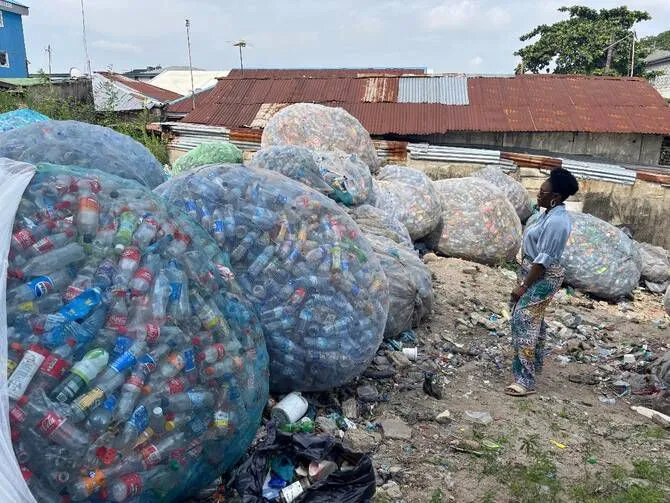
While recycling remains a critical component of waste management, industry operators say the sector continues to face challenges, including inadequate funding, poor logistics and limited collection infrastructure.
According to Mr. Taiwo Adewole of Recyclespoint, expanding recycling operations requires greater investment and support.
“The biggest challenges are logistics and funding,” he said, noting that many recycling businesses struggle to scale despite growing public awareness of environmental issues.
Against this backdrop, a new partnership between Oando Clean Energy and United Kingdom-based Polymateria is introducing biodegradable plastic technology that could offer an additional solution to the plastic waste crisis.
The technology is designed to allow conventional plastics maintain their normal properties during use before breaking down into a wax-like substance when exposed to environmental conditions. The material is then expected to biodegrade completely within a period of up to two years.
Speaking during a demonstration at Imperial College London’s I-HUB innovation centre, Polymateria scientist, Mr. Taylor Young, explained that the technology enables plastic products to retain their strength and functionality throughout their intended lifespan.
“The properties of the plastic remain unchanged after the technology is added,” he said.
President and Chief Executive Officer of Oando Clean Energy Ltd., Mr. Ademola Ogunbanjo, disclosed that discussions were ongoing with Lagos State and federal regulatory authorities ahead of pilot deployment in Nigeria.
According to him, the initiative will be implemented through POLYSOL Ltd., a company established by Oando Clean Energy and its partners to drive the project.
He emphasized the importance of obtaining regulatory approval to ensure the technology aligns with national environmental and waste management standards before large-scale deployment.
Ogunbanjo said the initiative is not intended to replace recycling but rather to complement ongoing efforts to reduce the environmental footprint of plastics.
Similarly, Chief Corporate Affairs Officer of Polymateria, Mr. Steven Altmann-Richer, described the technology as a practical response to the challenge of plastic leakage into the environment, particularly in countries where waste collection systems are still developing.
He noted that while much of the global conversation around plastic pollution focuses on oceans, the majority of plastic waste originates on land before eventually reaching marine ecosystems.

“Our objective is to prevent plastic pollution before it reaches the oceans,” he said.
Altmann-Richer also stressed the need for clear regulatory standards to encourage adoption, citing international frameworks and successful implementation in countries such as Malaysia.
Despite the promise of biodegradable plastics, experts caution that affordability and consumer acceptance will be critical factors in determining their success in Nigeria.
Adewole welcomed the innovation but questioned whether local manufacturers and consumers would be able to bear any additional costs associated with the new technology.
He maintained that recycling should remain at the centre of efforts to address plastic pollution, particularly through improved waste segregation and collection systems.
Environmental analysts agree that no single solution can eliminate plastic pollution. Rather, they argue that sustainable progress will depend on a combination of effective regulations, stronger recycling infrastructure, public awareness and continued innovation in environmentally friendly materials.
As Nigeria seeks lasting solutions to its plastic waste challenge, biodegradable plastic technology is emerging as a promising addition to the growing arsenal of tools aimed at protecting the environment and promoting a cleaner future.



Comments (0)
No comments yet. Be the first to share your thoughts.