
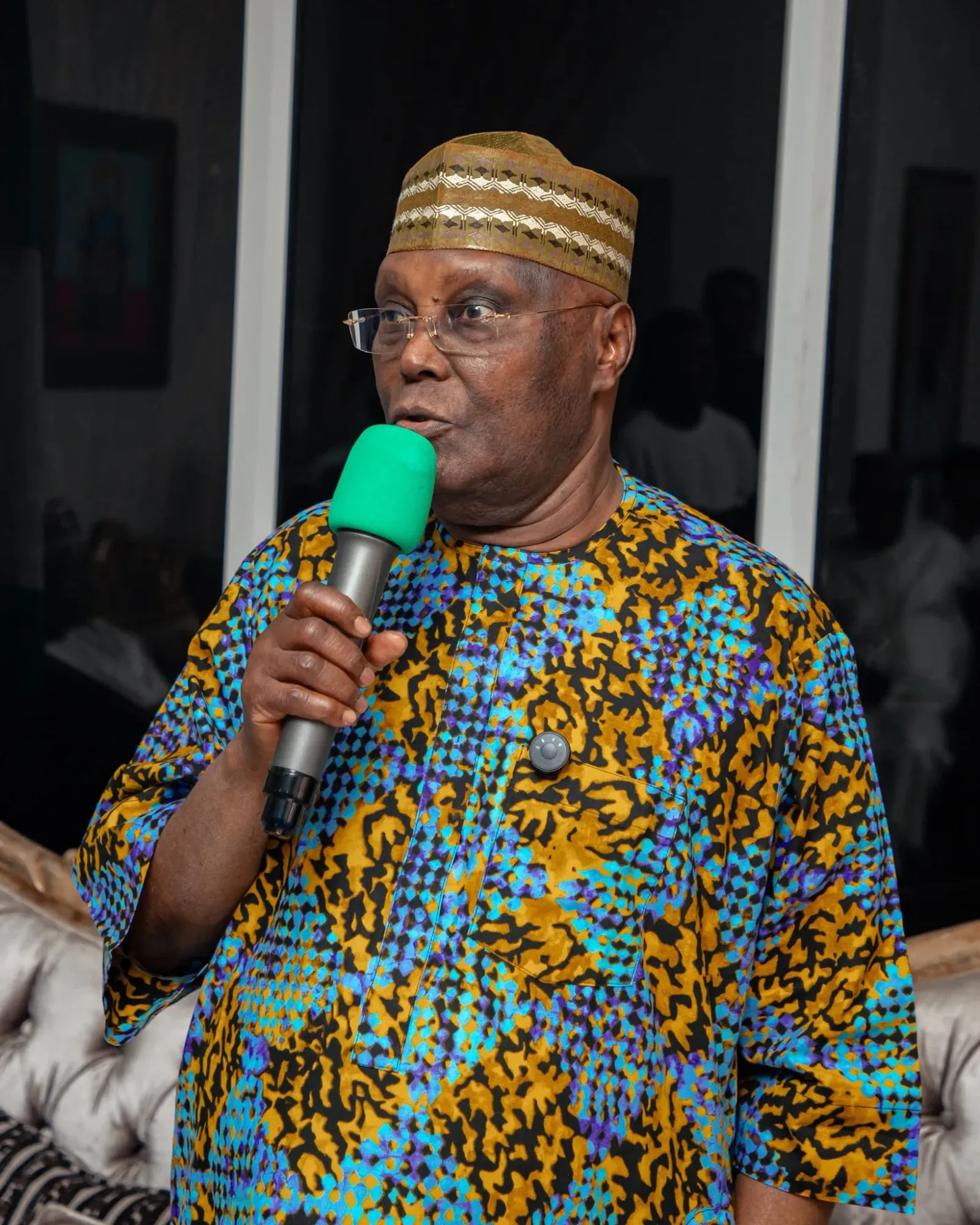
Alhaji Atiku Abubakar’s renewed advocacy for fuel subsidy has returned the issue to the centre of Nigeria’s political debate. While his proposal may appeal to Nigerians struggling with high living costs, it raises serious questions about whether the country should return to a policy that consumed huge public resources for decades.
Atiku recently said that if elected president in 2027, he would reintroduce fuel subsidy by subsidising fuel production. Although his media aide attempted to provide further clarification, Atiku reportedly stood by the substance of his proposal.
On the surface, the idea may appear compassionate, particularly at a time when millions of Nigerians are dealing with rising living costs. But the fundamental question is whether subsidising fuel production would solve the problem or simply recreate the same fiscal burden that Nigeria has struggled with for years.
President Bola Ahmed Tinubu’s decision to remove the petrol subsidy in May 2023 was deeply unpopular. However, supporters of the policy argue that it was necessary to end a system that placed enormous pressure on government finances.
Before its removal, the subsidy consumed trillions of naira. Between January and May 2023 alone, the Federal Government reportedly spent more than N3 trillion on petrol subsidy, while official figures put total expenditure on the scheme between 2006 and 2023 at more than N15 trillion.
Critics of the old system have long argued that much of the money could have been better invested in education, healthcare, infrastructure and security. There were also concerns about smuggling, fuel diversion and opportunities for manipulation within the petroleum distribution chain.
Calling the proposed arrangement a “production subsidy” does not fundamentally change the economics. If government continues to pay part of the cost of producing fuel so that consumers can purchase it below its market cost, public funds are still being used to subsidise consumption.
Nigeria therefore faces a crucial choice: return to a system of broad subsidies or continue building a competitive domestic petroleum market.
Since subsidy removal, the country has witnessed increased attention to local refining. The Dangote Refinery has emerged as a major domestic supplier, while efforts have also intensified to revive existing refineries, including those in Port Harcourt, Warri and Kaduna.
The argument for deregulation is that greater domestic production and competition could eventually reduce Nigeria’s dependence on imported petrol and ease pressure on foreign exchange.
The government has also introduced measures aimed at cushioning the impact of subsidy removal, including compressed natural gas initiatives, student-loan programmes, credit schemes, wage-related interventions and infrastructure spending.
The challenge, however, is ensuring that these interventions actually reach the Nigerians who need them most.
Rather than returning to a blanket petrol subsidy, the more sustainable approach may be targeted assistance for vulnerable households and measures capable of reducing transportation and production costs.
CNG conversion, improved public transportation, support for local refining and policies that encourage domestic production could provide longer-term relief without recreating a massive subsidy bill.
There are also broader economic considerations. Frequent changes in major economic policies can undermine investor confidence. Investors planning billions of dollars in refineries, storage facilities and other energy infrastructure need confidence that government policy will remain reasonably predictable.
At the same time, macroeconomic improvements alone cannot be treated as proof that ordinary Nigerians are already better off. Economic growth, moderating inflation, currency stability and stronger foreign reserves are important indicators, but their real value ultimately depends on whether they translate into lower costs, better jobs and improved living standards.
That is where the government still has significant work to do.
Leadership often requires making difficult decisions, particularly when popular alternatives may offer immediate relief but create larger problems in the future.
Atiku has every right to advocate a different economic direction ahead of the 2027 election. But Nigerians should examine the long-term consequences of any proposal to restore fuel subsidies.
The central question is simple: should Nigeria return to a system that requires government to continually spend public money keeping fuel prices artificially low, or should it intensify reforms aimed at making fuel cheaper through domestic refining, competition and alternative energy sources?
Nigeria spent decades subsidising petrol while importing much of what it consumed and watching its refineries deteriorate.
The lesson from that experience should not be ignored.
The 2027 election should therefore be about more than promises of immediate relief. It should be about determining how Nigeria can build an economy capable of delivering sustainable prosperity without relying on policies that repeatedly drain public resources.
Subsidy removal has imposed significant hardship, and the government must do more to cushion the burden. But returning wholesale to the old subsidy regime may simply postpone the problem rather than solve it.
For Nigeria, the real task is to make reform work for ordinary citizens—not to revive a system whose weaknesses have already been demonstrated.


Comments (0)
No comments yet. Be the first to share your thoughts.